
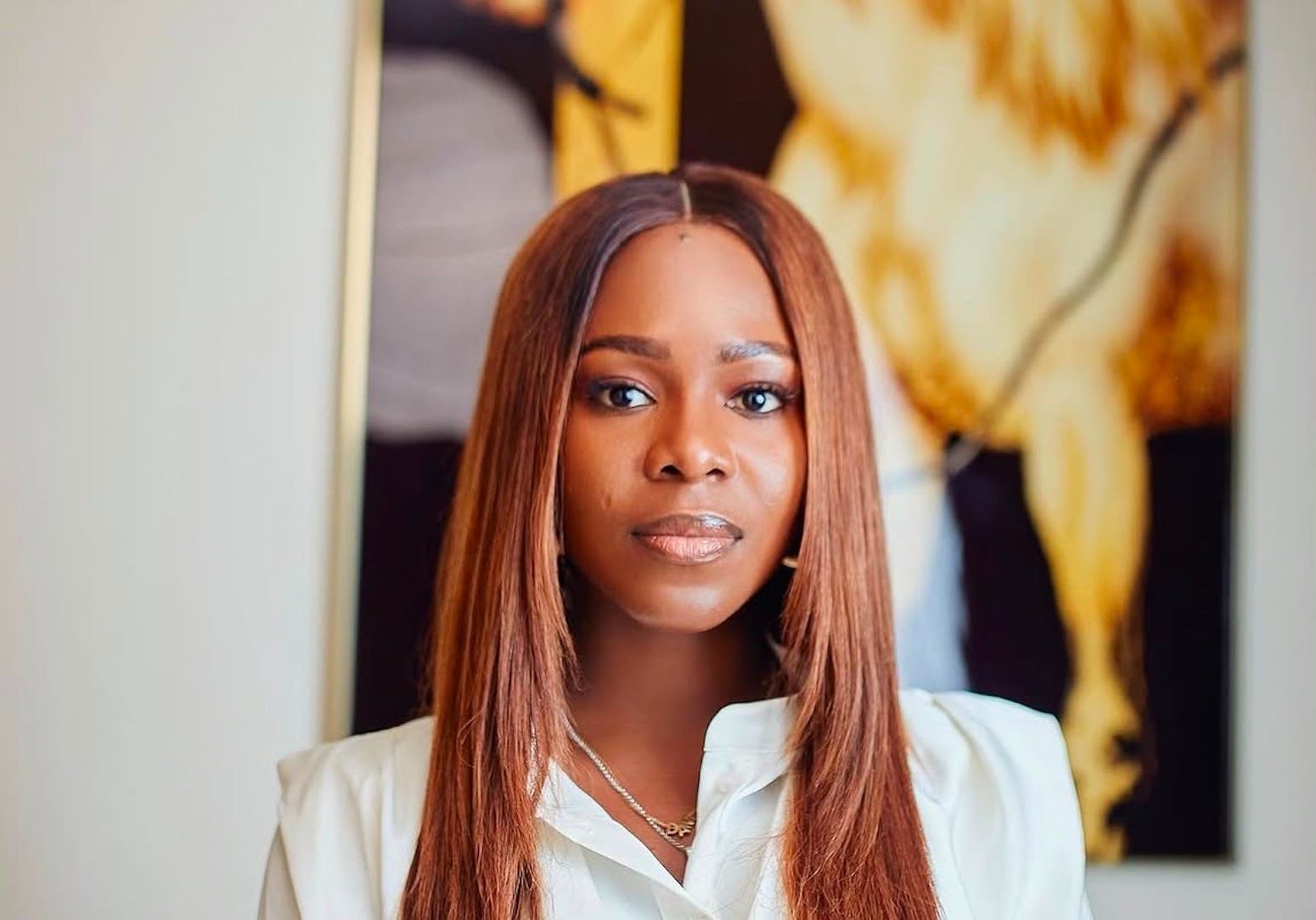
The inside story of how Dammy Feyide built a free secondary school in Lagos
In 2019, Dammy Feyide, while observing the NYSC program, visited a remand home in Mushin. The trip spurred her to begin a creative arts program for teenagers in correctional centers.
Seven years later, the creative arts program has evolved into Let It Shine Academy (LISA), a free secondary school with boarding facilities in Lekki.
Today, LISA is home to 263 children, including nearly 30 kids from correctional centers, and runs fully on donations and what Feyide calls ‘the grace of God’.
Below is Feyide’s story, in her own words, as told to Ikeja Record’s Omon Okhuevbie.
READ ALSO: How Tomi Adesina is holding the government accountable
READ ALSO: Ire Aderinokun on Yoruba identity, spirituality and why Nigeria will always be home
On her identity and childhood
My name is Dammy Feyide. I’m 31 years old. I’m from Ondo State. I’m Christian. I studied economics and business management at the University of Sheffield. Currently, I’m the founder and CEO of Let It Shine Academy, which is an intervention organization that provides access to free and quality education to children and communities that are marginalized. I am also the lead of SME development at Providus Bank and run a small cafe in Lekki called Haske Cafe. It’s a matcha cafe.
Growing up, I had access to opportunities. For example, my dad made sure that every single one of us (his children) learnt a language. When I was in university, I studied Spanish for three and a half years. My father also ensured that we all had a sport. I can swim. I can play golf. I can play tennis. And he also made sure that we all had an instrument to learn. I have a guitar and I can play. My brother can play drums. My sister can play the keyboard. My other brother has his sax. So we grew up in a household where we were very exposed. And I think it sort of broke my heart seeing that so many other people didn’t have this access.
On her plans before LISA
I was working in a bank. I was in finance. Before then, I was working in England. I worked in tech. I was just working, doing my normal nine to five, building my career. I was very business minded. I didn’t even know I would have a cafe but I knew I would get into some sort of business at some point. But never school. I didn’t even like school or children’s education. Because I didn’t think I was the most maternal. And again, I didn’t study education.
On what led her to begin LISA
There was a defining moment but I should start by saying everything that I do is led by God. And this was led by God. Because if I knew what this was, I wouldn’t say I want to do it. It’s a lot. And I always tell people that God is kind. He didn’t show me the whole picture because if He showed me the whole picture, I would say actually I’m not doing this.
The defining moment was when I moved back to Nigeria between 2019 and 2020. And the one thing I couldn’t really reconcile was just seeing children on the road. And, I’ve always been a big empath, so I always give them money. But I would still see them tomorrow and the day after tomorrow. And I began to understand that this N500 or N200 is not a solution. It’s not even doing anything. So I think for me, it was just, okay, what’s the solution? But I didn’t really think much of that.
And so as that was happening, I stumbled on – when I say stumbled, I knew it was God that was leading me – a remand home in Idi-Araba, Mushin, with my driver at the time. I wanted to just go and see what it was like. Because my church was doing a community outreach at the time but I missed it.
At the remand home, I told the manager of the facility at the time – may she rest in peace – if I can come back on Valentine’s Day with my Christian fellowship friends. It was the first time I had done anything like that. I used to do orphanage visits with my parents as a child but I had just moved back to Nigeria as an adult.
That week of our return, I remember fasting and asking God, what do you want us to do with this visit? Because I was already going to pack food. I think the normal thing is to take food.
But I remember God just saying very clearly, take art materials. So I had to call my friends and say, we’re not doing food. Maybe we will just do biscuits and drinks. But we can put our money – we had raised some money – and buy art materials; cardboard, paint, crayons, all of that.
So we went there and we spent the day with the kids. And about 80 percent of the kids had never played or seen cardboard or paint or crayons before. It took me back to, what is going on? They eat, sleep, all of that. They don’t go out.
I was talking to the kids. They want to be doctors when they grow up. They want to be this. They want to be that. And I remember just being like, God, how do they get from point A to point B to C?
And I think that was the day that I believed that my heart changed or something changed. You see something and you can’t unsee it. I became so burdened over these kids.
So I decided I didn’t just want to bring art materials. I want to actually teach them how to paint. Because I don’t have a painting bone in my body, I called a friend who had an art studio to ask whether I could borrow one of their instructors.
I went back every weekend for a year and taught them how to make hair, crochet, bead making. I also started teaching them English.
On whether she had doubters
Yes, people thought and said that it was unrealistic. But if God says something to me, I don’t listen to anybody else. And the moment I saw it, I had a vision. I knew what God wanted to do. It didn’t really matter who was saying yes or no.
Building her own capacity
As I started working with a lot of kids, I decided to do an online course with Harvard focused on children rights and development. I wanted to understand what the basic rights of these children are, why there is a gap and why they don’t have access.
So I did that and it really changed me. I was understanding the rights of children and how children are suffering across the country.
One of my course modules at Harvard was about children being in contact with the law. They were showing me what the juvenile correctional center in America looked like. These centers had proper education centers within them. And they spoke about three pillars: prevention, rehabilitation, and reintegration. So, the whole point of them doing these classes was to integrate the children back into society.
And at that point, #EndSars had happened. So much was happening in Nigeria. And I was just like, we have a serious issue with security and all of that.
And I was understanding that it’s a cycle. Because there’s no integration. There is no education. So I started doing some research on whether we have a juvenile center in Nigeria. What does that look like? And I found out about the correctional center for boys in Oregun, Ikeja.
One of the women I was working with through my creative academy said that she knew the principal at the Oregun centre at the time. So she introduced my work to him. My pitch to them was to do the creative academy at the centre, teaching the boys arts, coding, shoemaking and carpentry.
I met with the principal and they gave me a tour of the facility. There were over 100 boys at the facility. Some of them were in school. Others were not doing anything, just idle. I also found out that the government only provided primary and not secondary education. So you would find 18-year-olds in primary one and 20-year-olds in primary two.
So I felt like there was a big problem. And I asked them to let me teach the ones that are done with primary school, so that when they come out, they can actually enroll in school and won’t be idle. They agreed but I think they didn’t take me seriously. They felt I would get bored and leave Nigeria after my NYSC. I was doing my NYSC at the time in the bank.
However, I found a lesson teacher, Mr Temidayo, who is our principal today at LISA. We agreed on payment and he started teaching about 12 boys.
From there, the Oregun facility told me more boys were interested and they expanded our lesson days from just Saturday to Friday through Sunday. We also ended up teaching up to 45 boys. It was at that point I got the name LISA; that was the name that God gave me.
For a lot of the boys, we had to first teach them how to speak English. We also had to find a way to encourage them to attend. So I printed out shirts and exercise books with LISA on them. This made them feel like a part of something good.
Then Access Bank reached out to me and said they would like to help. They helped us to renovate one of the classes in Oregun.
From tutorial class to secondary school
I viewed my work at the Oregun correctional center as tutorial sessions but everyone was like you’ve started a school. I used to say it was not a school.
Meanwhile, at my office, Providus Bank, one of the directors commended my work and offered a space inside YabaTech he used for an entrepreneurial hub before Covid. He offered the space as a hub for the children to congregate. But when I went to see the space, I felt we didn’t need it since we were going to meet the kids at Oregun. So I started praying to God about what I was going to use the space for.
I woke up one day and just knew I was meant to start a free secondary school. But again, I didn’t really understand why, because in my mind, everybody that needed to be in school was already there, even the kids I used to see on the road. I felt those kids went to public schools. And I was comparing it to public schools in London where if we miss a day or two, your parents could be arrested.
Finding the first students
So I made a deal with God to do an outreach. If I find the children that need a free secondary school, then I will do it. If nobody says they need it, then maybe God made a mistake or I was not hearing correctly. But, in my mind, I didn’t think anybody needed it.
This was in 2021. Mr Temidayo was with me, and a friend of mine. I printed out flyers. The school was in Yabatech, so we went on the street announcing a free school. And that was the day that everything actually changed. Like 70 percent of my current SS2 kids, we met them and their parents on the road that day. That was also the day I found out that public schools in Nigeria are not 100 percent free because they pay other fees. I realized that uniforms, for example, weren’t free.
I met kids that for one reason or the other were not in school. Some were on a wait-list. You can be on a wait-list for a year or two. A woman said her child got into a school but the area is very rough and the quality of education is poor. I met parents who were crying and saying they’ve been praying for something like this.
This was around July and by October, we had opened as a secondary school in YabaTech.
I had to register with the Ministry of Education. I had to start hiring teachers with Mr Temidayo. Thankfully he was a teacher.
I had to buy books, uniforms.
We started with one class of about 20 students.
Then, in January 2022, we moved to Owen street in Yaba. Because YabaTech kicked us out, saying we can’t have a school within a school.
Owen Street was small. We were there for two years. Then we moved to Muritala Street in Yaba, where we stayed for almost three years before leaving last year.
We were a day-school for five years. In September 2025, we moved to Lekki and became a full boarding school.
On transition from day to boarding
Since we started, I kind of knew that the end goal at some point was going to be a boarding school but I thought maybe in 15 or 20 years. But I didn’t know it was going to be this quick. We made the transition for a number of reasons.
The biggest issue was feeding. You may assume that because the children are not paying school fees, they should be able to come to school with lunches. But a lot of times, we had to buy food for them.
Also a lot of children were still working. After school, you will see them change into work clothes. They wouldn’t do homework because they were working. So it was almost like we had them, but we couldn’t really fully have them and integrate them into what we were doing.
Because of all these distractions, a lot of the kids don’t get to be children. So I knew that I needed to really get them to focus and concentrate.
So now, all these things are under our control. They have lessons and prep time. They have nurses. They also have teachers who live on the grounds. And they are eating three times a day.
Also, we now have people from other places. Before, it was only children from the vicinity, but now we take children from places as far as Ondo state.
On who qualifies to attend the school
Any child that is from a marginalised home or community or background can attend LISA. They can be from a correctional centre, from the street or maybe their parents or guardians can’t afford public schools.
If a child needs help, wants to go to school, and is also academically inclined.
Because I also understand you can’t force people. It’s one thing for you to be in need of this and actually want this and all of that.
So it is for people who are interested and actually want to go to school.
We also have a very strict admission process. People apply and then the child writes a test. We have a pass-mark. If you meet the standard, then we invite the child and their parents or guardians for an interview.
This year, we had almost 300 applications but unfortunately, we could only take about 70 students.
Some of the applicants didn’t make the cut-off mark but we also have limited space and resources. We would love to take more people but we need to manage our resources carefully.
For those we turned back, we told them to come back next year.
On how LISA is funded and sustained.
It is actually by the grace of God. I don’t even know how it’s funded. I’m joking, but I’m not joking. It has actually been God because this is actually impossible but I don’t know how it’s possible. Every day we are here, and they are eating, it’s a miracle.
And every staff member is paid. We pay over 50 people every month. Because while we are free, this is their own job. This is their life.
But we don’t get any inflows, like ‘oh school fees are coming’. Nothing is coming. It’s only donations.
But even with donations, I can’t say they are regular, because I can’t control human beings. It’s just praying. That’s why I’m saying it’s by the grace of God, because, yes, we’re getting inflows of donations, but it doesn’t mean it is consistent.
There might be months when nobody donates, and there might be months when somebody donates.
This is why we do a lot of social media and awareness, because the more people that know, the more people that maybe will donate.
And partnerships as well. We apply for grants, partnerships, with banks, organizations, and companies. We also have different campaigns like ‘sponsor a child’ or ‘sponsor a teacher’.
Last year, to ‘sponsor a child’ was about N200,000 but this year it is N300,000 for one year. This covers their books, their books, uniforms, all those things.
Food is our biggest expense. We have Master’s Bakery that gives us bread. We have never bought bread before. They donate bread three times a week to us. We have Ibeji Farms, which gives us meat every two weeks. We have never bought meat before. We have Kewa’s Kitchen, which gives us garri and spaghetti every month as well. and then we buy the rest.
But sometimes someone just gives us rice and things like that as well. But, you know, which is why we are always looking for money and fundraising. ✚


