


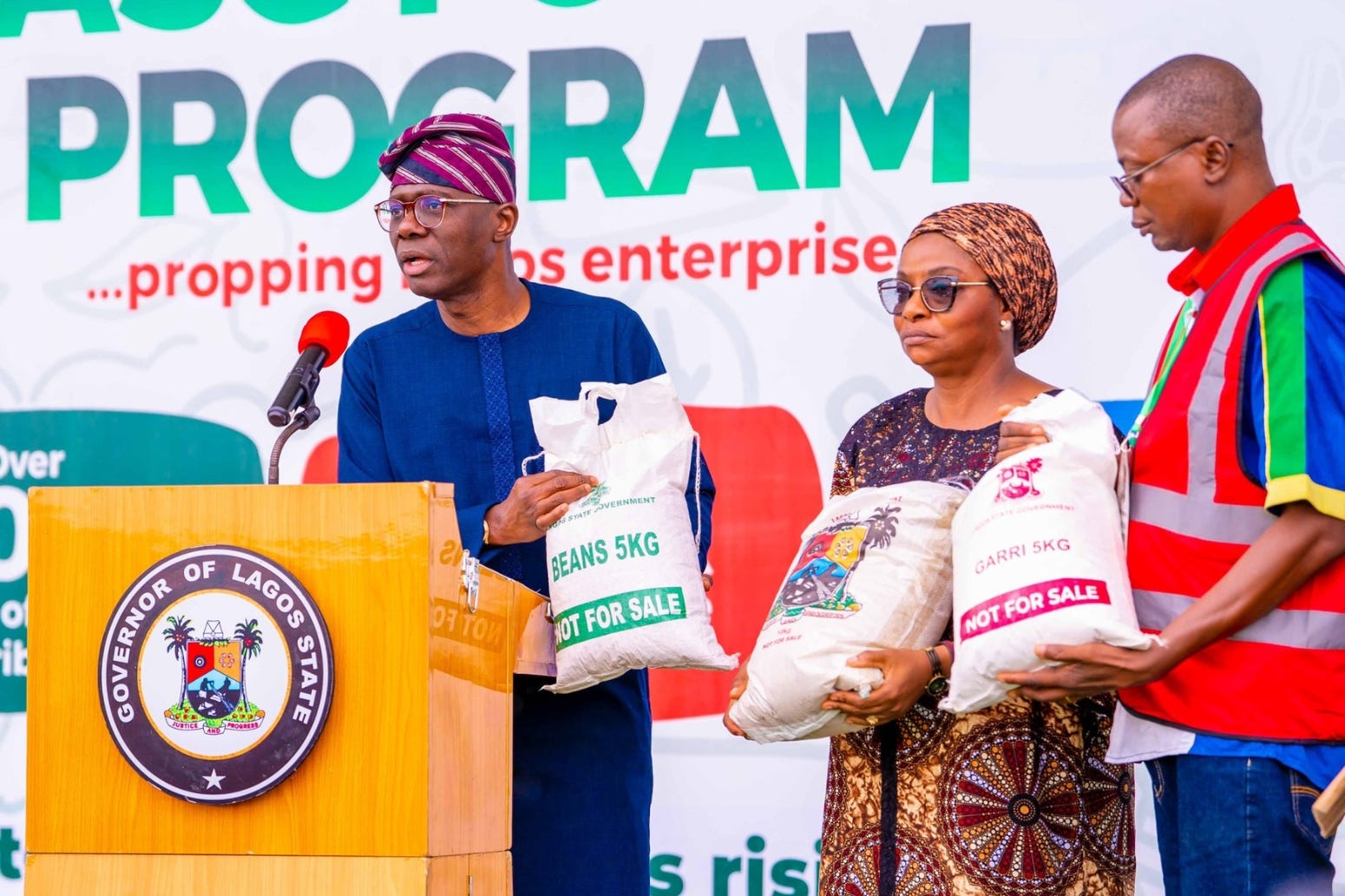
Since December 2023, the Lagos State Ministry of Agriculture and Food Systems has commissioned three food hub facilities in Mushin, Abijo, and Agege.
According to the Commissioner for Agriculture and Food Systems, Abisola Olusanya, the food hub project is part of the state government’s plan to address the challenges of food distribution across Lagos.
Speaking at the Stanbic Nigeria Business Summit in April 2026, Commissioner Olusanya said more than 70 percent of the food consumed in Lagos comes from other states.
The commissioner identified inefficient supply chains, post-harvest losses, price fluctuations and high logistics costs as some of the challenges affecting the state’s food system.
In this Q&A, Ìkẹjà Record explains the origin of the food hub project, its main objectives, and the progress in its execution so far.
Where did the food hub project come from?
What does the food hub project hope to achieve?
Reduce the cost of food distribution
Reduce post-harvest losses through better storage
Improve farmers’ access to markets and increase their income
Improve food affordability and strengthen food security
Create jobs and organise food trading
What is the current state of the project?
Where did the food hub project come from?
Agriculture is one of the key priorities of Governor Babajide Sanwo-Olu’s second-term administration.
To advance this agenda, the Lagos State Government developed a Five-Year Agricultural and Food Systems Roadmap (2021–2025), a framework designed to strengthen the agricultural value chain, improve productivity and promote food self-sufficiency across the state.
In 2022, Governor Sanwo-Olu flagged off the development of the Food Security Systems and Central Logistics Park in Ketu-Ereyun, Epe. The facility was conceived as a central hub for receiving, storing and distributing agricultural produce, and was slated to be completed by the second quarter of 2025.
To complement the central logistics park, the government also set out to develop middle-level food hubs across the state.
In February 2022, the state government awarded the construction contract worth ₦59 billion to Origin Tech Group.
What does the food hub project hope to achieve?
1. Reduce the cost of food distribution
One of the objectives of the food hub project is to reduce the cost of moving agricultural produce from farms and other supply points to markets across Lagos.
Currently, food brought into the state often passes through several intermediaries and markets before reaching retailers and consumers. Each stage can add to transportation and handling costs, which may eventually be reflected in the prices paid by consumers.
The government’s plan is to establish a more organised distribution network, with the central logistics hub in Epe serving as a major aggregation and storage point, while the middle level food hubs bring produce closer to different communities.
In April 2026, Commissioner Olusanya said the central logistics hub in Epe was designed to handle more than 1,500 trucks daily. It is expected to have integrated cold and dry storage facilities, processing units and distribution infrastructure.
The state is also planning a trailer park at the Epe facility with capacity for between 1,000 and 1,500 vehicles. The government also intends to establish nine middle level food markets across Lagos. In October 2026, Governor Sanwo-Olu shared that five had either been completed or committed to development, mentioning locations including Ajao, Agege and Mushin. The Governor also identified a facility being completed in Festac and another planned for Ikorodu.
If properly implemented, the network could reduce distribution chokepoints between suppliers and retailers, potentially lowering the cost of getting food to markets.
2. Reduce post-harvest losses through better storage
Another objective is to reduce the amount of agricultural produce lost between harvest and consumption.
Fruits, vegetables and other perishable food items can spoil when they are not stored or transported under suitable conditions. Delays in moving produce, poor handling and inadequate storage facilities can also contribute to losses, particularly when farmers and traders lack access to reliable cold-chain infrastructure.
At the 32nd Nigerian Economic Summit in October 2026, Governor Sanwo-Olu reportedly put Nigeria’s post-harvest losses at between 40 and 45 per cent. The central logistics hub in Epe is expected to address some of these challenges through cold-chain storage, dry-chain infrastructure and processing facilities. These are intended to help preserve produce for longer, improve handling and create opportunities to process food before it spoils.
The government also expects the hub to support between 50 and 80 small food-processing and agro-processing businesses. These businesses could process produce sourced from states such as Nasarawa, Taraba, Kogi and Kwara before it is distributed to consumers and other markets.
3. Improve farmers’ access to markets and increase their income
The food hub project is also intended to create a more predictable market for farmers and other agricultural suppliers.
Farmers often face difficulties finding buyers for their produce, particularly when supply is high or when they lack the resources to transport their goods to major markets. These challenges can weaken their bargaining power and reduce the income they earn from their harvests.
The Lagos State Government says its wider food systems programme will connect agricultural production more directly to demand.
One of the initiatives is the Produce for Lagos Programme, which is intended to link supply with the state’s food requirements and provide farmers with more predictable markets.
The state has also introduced a ₦500 billion Offtake Guarantee Fund as part of its wider intervention framework. According to Commissioner Olusanya, the fund is intended to reduce investment risks, provide more predictable demand and make agribusiness projects more attractive to financial institutions.
The government is also investing in food processing and value addition. Commissioner Olusanya said the Imota Rice Mill produces more than 2.5 million 50kg bags of rice annually, highlighting the state’s efforts to process agricultural produce locally.
These initiatives are connected to the broader food systems agenda and are intended to strengthen the links between farmers, processors, buyers and consumers.
4. Improve food affordability and strengthen food security
Lagos depends heavily on food supplies from other parts of Nigeria. This makes the state vulnerable to disruptions in transportation, supply shortages and rising costs along the distribution chain.
The food hub network is intended to make food distribution more organised and improve the availability of produce across the state.
Under the proposed arrangement, the central logistics hub in Epe will receive and store produce in bulk. The middle level food hubs will serve as distribution points closer to different communities, while retailers and other buyers will move the produce to consumers.
By reducing unnecessary movement and multiple layers of intermediation, the government hopes to improve the efficiency of food distribution and help stabilise prices.
According to Governor Sanwo-Olu’s remarks at the Nigerian Economic Summit in October 2026, the state is also seeking between $3 billion and $4 billion in private-sector investment for its wider food systems initiative. Ultimately, the hubs are expected to improve the movement and availability of food across Lagos. Whether this translates into lower prices for consumers will depend on how efficiently the facilities operate and whether savings in distribution costs are passed on to buyers.
5. Create jobs and organise food trading
The food hubs are expected to support employment and create opportunities for people involved in food trading, processing, transportation and distribution.
The central logistics hub in Epe is set to accommodate small food-processing businesses, while the middle level markets will provide spaces for traders and retailers to buy and sell produce.
Meanwhile, the government has linked the food systems agenda to its youth employment and skills development programmes. The Ministry of Agriculture said the Lagos Agripreneurship Programme had trained more than 15,000 young people in modern agribusiness practices.
The government has also reported economic activity at the operational Mushin food hub. At the commissioning of the Agege facility in August 2026, Governor Sanwo-Olu said the Mushin hub had recorded more than ₦4 billion in transactions over 228 market days, with over 850 registered vendors and more than 7,000 direct and indirect jobs.
What is the current state of the project?
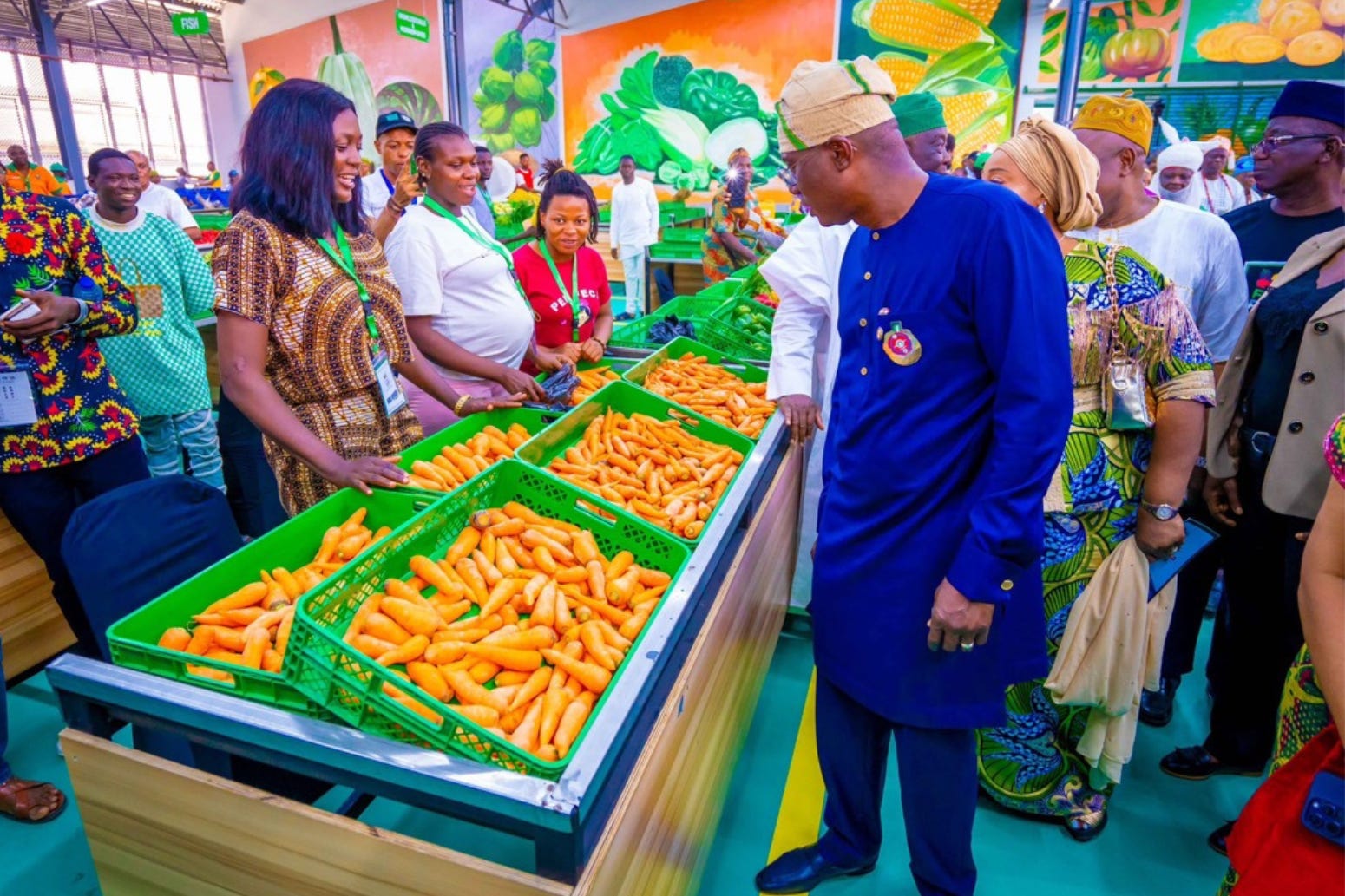
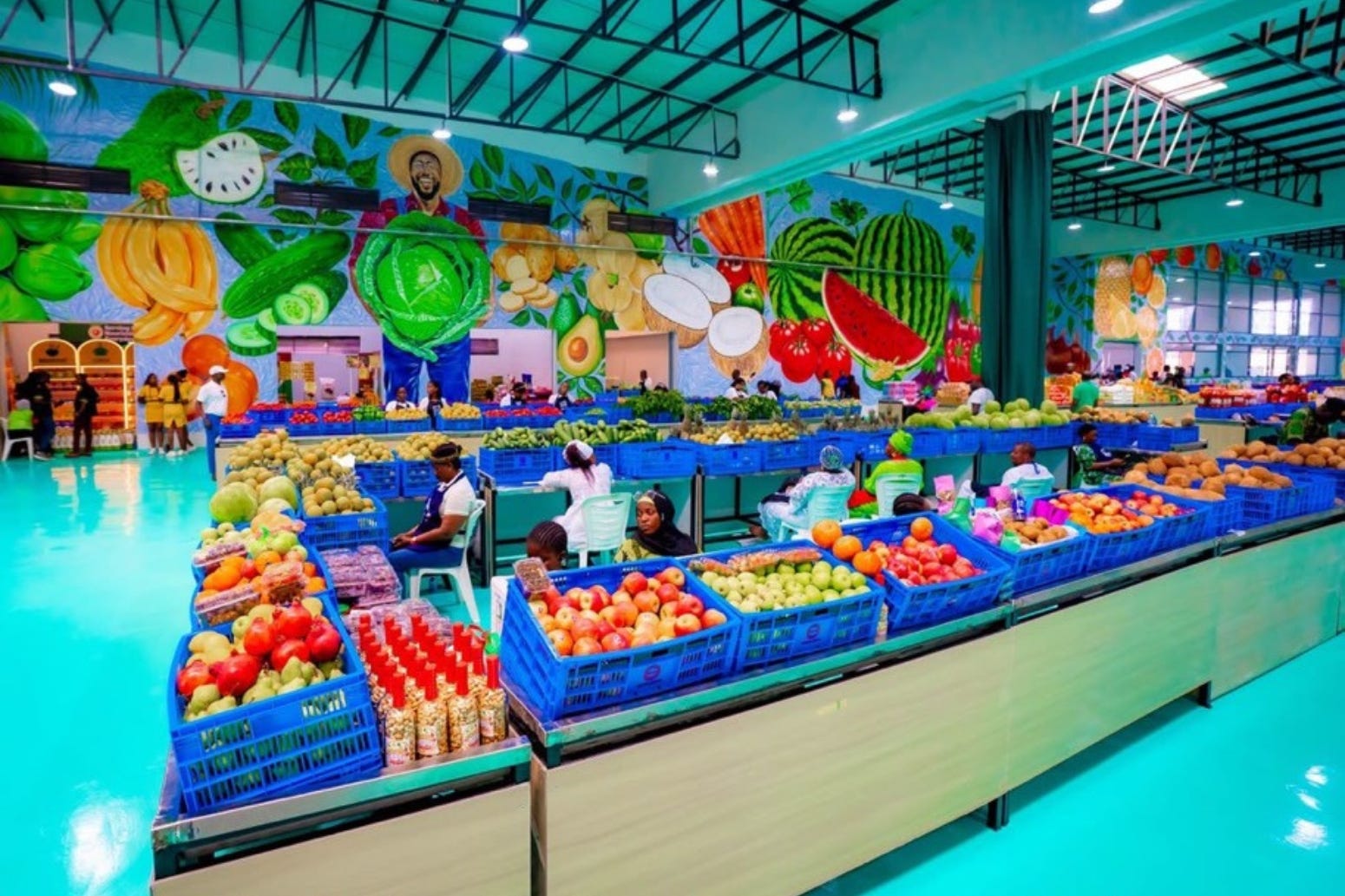
The state government has commissioned three middle-level food hubs in Mushin, Abijo and Agege.
The Mushin facility is operational, while the Agege Fresh Food Hub at Pen Cinema has opened with limited capacity. The hub in Abijo was not operational as of September 2026.
According to P.M. News, the central hub in Epe is about 70 percent complete and scheduled for commissioning in December 2026.
This timeline raises questions about the project’s delivery. When the central logistics park was flagged off in 2022, it was expected to be completed by the second quarter of 2025. The latest reported timeline is therefore more than a year beyond that initial target. ✚