
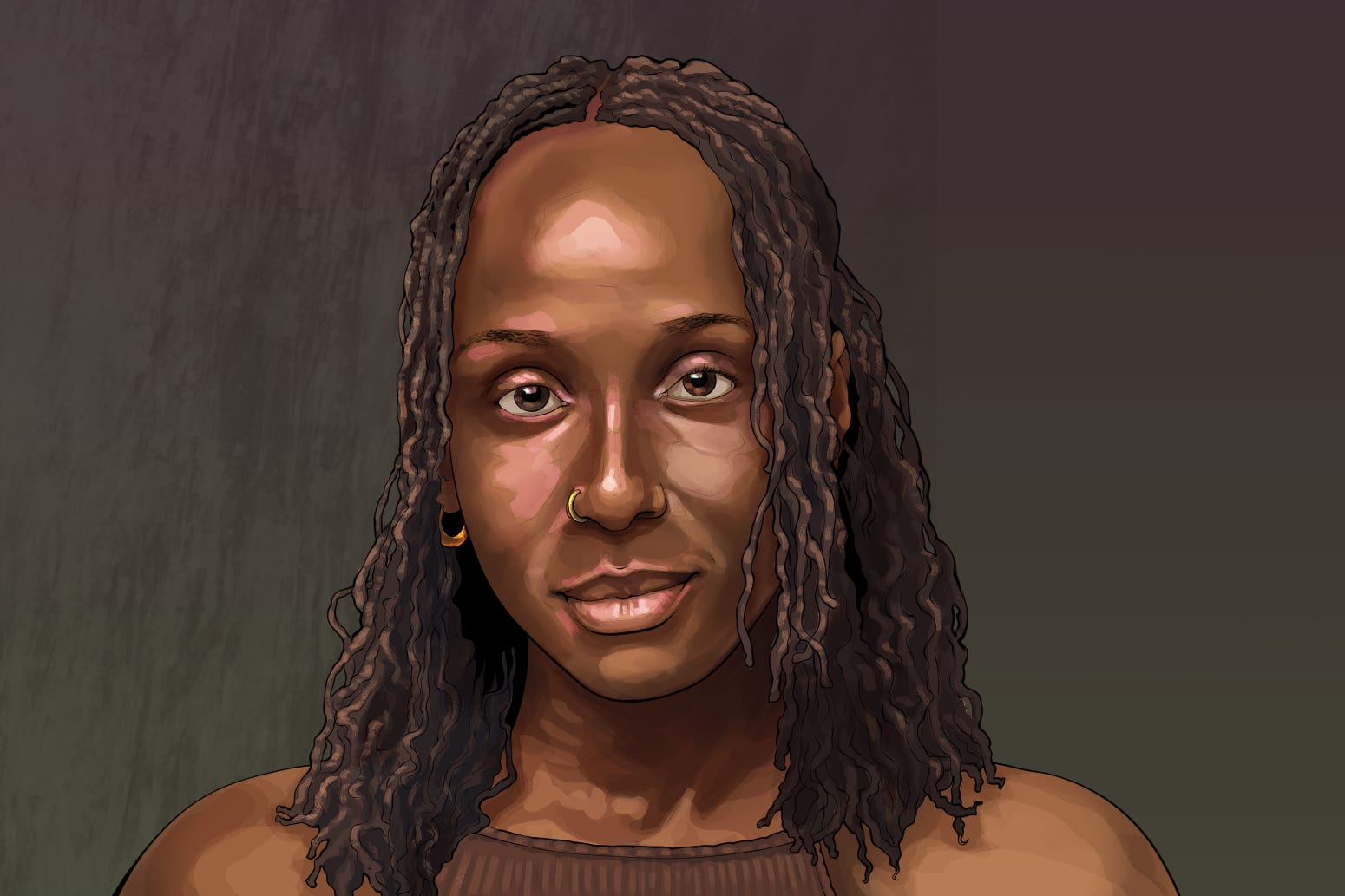
Ire Aderinokun on Yoruba identity, spirituality and why Nigeria will always be home
Ire Aderinokun is Nigeria’s first female Google Developer Expert and has been ranked as one of the country’s top programmers, according to GitHub, the world’s largest developers platform.
She was one of 50 women recognized by TechCabal in its representation of Lagos’ tech women. The Guardian has described her as an “inspiring tech queen”. Nairametrics praised Ire for giving back to the local tech community by sponsoring women on Udacity nanodegree programs.
Ire is also a founding member of the Feminist Coalition, one of the key progressive actors during Nigeria’s landmark #EndSARS protest.
In January, Ire announced on her X page that she was creating a personal curriculum to study three subjects: Nigerian political history, non-Abrahamic religions and the Yoruba language.
I reached out via email to learn more about her interest in the topics and she agreed to an interview.
Our conversation took place on Google Meet. The transcript below has been edited for organisation and clarity.
READ ALSO: Kọ́lá Túbọ̀sún on what it means to be Yoruba
READ ALSO: Tolu Daniel on the dialogic violence of Yoruba nationalists
READ ALSO: How Tomi Adesina is holding the government accountable
READ ALSO: What Victor Ekwealor loves about Yoruba culture
Solomon Elusoji: What made you start thinking about studying the world’s religions, Yoruba culture and Nigerian history?
Ire Aderinokun: I would say it is an evolution of different things. I would not describe it as ‘I wasn’t interested before and all of a sudden I’m interested’. I think the three subjects of the personal curriculum I’ve been doing are kind of a natural evolution of what I’ve been learning before. With the Yoruba, it’s something I’ve wanted to study my whole life. And I’ve been studying over the past few years but just because of life and everything else, I have not been able to take it as seriously. So, that’s why I chose that. In terms of Nigerian history, it was a combination of things. Last year I was reading a book about African independence and I thought it was really interesting; and I wanted to read something specifically on Nigerian independence. Then I started researching and decided it was something I wanted to focus on. Also, because we do have the elections next year. I feel like I’ve grown up here and spent half of my life living in Nigeria, but I feel like I know more about politics in the UK or even the US than I know about in Nigeria; so I just felt like I really want to be a lot more informed. Whether I’m here or not to vote is another thing. I’ve only voted in one election, eight years ago. And even then when I voted, I didn’t feel like I was well informed. And I think it’s important to be an informed voter, so I wanted to take it more seriously and understand how we got to where we are. I feel like it’s difficult to jump in and not understand the history of how people got to where they are today.
And with the non-Abrahamic religions: I describe myself as an agnostic-atheist. So, I’m not really religious. I grew up in Christianity. Obviously as a Yoruba family, we have Christians and Muslims in the family, so I’ve been around both my whole life. But then I was watching a TikTok video where they were explaining stories in Buddhism versus Christianity; and I just found that story interesting and realised it resonates with me. So I thought of researching other religions, because I feel like my worldview of religions is very Christianity and Islam based. I feel like there is a lot more out there that I could explore. I was also reading something that took you through a series of questions in order to find your worldview, and it came up with something like atheistic-dualism, which is like you don’t believe in a god but you believe there is a difference between the physical world and a mental world. So, I wanted to do more research into other things, including the traditional religions here. And that’s why I also started looking into Ifa and other non-Abrahmic religions.
In terms of your identity, do you consider yourself Yoruba-first or Nigerian-first? Have you ever thought of identity in those terms?
That’s a very good question. I would say I feel a bit conflicted about this. I feel like I do think of myself as Yoruba first. But because I don’t understand the language very much, I feel like I’m missing a lot to really claim that identity first, even though that’s how I think of myself. I have a conflict with that. That’s also why I was a bit hesitant to do this interview in the first place, because I have very complicated feelings about my Yoruba identity. I think I miss so much because I don’t fully understand the language.
I also do not speak Yoruba language fluently, at least according to my parents and my brother, who’s probably more competent with it. And I guess I have similar struggles. Yes, language is a huge marker for claiming Yoruba identity. But I guess there are other things that make one Yoruba other than language.
I do agree with that. But as I’ve been trying to study more, I can see how there’s so much in it. I’m learning how even religion is very intertwined with the language and with the culture, and it’s almost like all one thing. And I guess going on this journey helps me unlock so much more. I do feel strong Nigerian ties as well, but I think if it had to come down to it, I would definitely say I’m Yoruba first. Even when I was trying to consider what to study, I was debating whether to study Yoruba history not Nigerian history. But I decided to do something broader because I was concerned with political history, not just my own history. I do plan at some point to read more deeply about Yoruba history.
How would you describe Nigerian identity in your own terms? What makes someone a Nigerian?
I’m not sure I know the answer to that one. I feel it because I grew up here, because I was also relatively recently married, just over a year ago. And my husband was born in Nigeria and emigrated to the UK when he was five. He grew up in the UK and then came back to Nigeria as an adult. Spent some 10 years and then moved back to the UK. So, he’s very British and Nigerian. But for me, even though I’m British as well because I just got my passport less than a year ago, I would never think of myself as British. I would always consider myself Nigerian. Even when we moved to the UAE, I brought my Nigerian flag; I don’t think I would ever bring a British flag; it would always be a secondary thing to me. And I think it’s because I grew up here and it’s my first reality.
I mean, we do have a Nigerian culture, even though we all have our own cultures. There is a Nigerian culture. I can’t really describe what it is. Maybe it’s like shared complaining about NEPA, but I think there’s that culture. It’s not just Yoruba, Igbo or Hausa culture; there’s actually just a Nigerian culture.
I do agree with you. I guess what I’m also taking from you is that place does matter. Where you spend time is important.
Yes, I definitely agree with that. I feel like it would always be my home as well. When people ask me where I consider home, it’s always here even if I have not fully lived here for a while; it’s been like five years since I moved. But I always still consider this home.
Since you’ve started your curriculum, what are some of the things that have surprised you?
From any of the three subjects?
Yes. Because what struck me about the subjects is that they all point towards the question of identity. So I’m curious whether anything has changed about how you see yourself since you started studying?
In terms of how I see myself, I think I feel a bit more confident in my identity, because I’m starting to understand where I come from, my culture; so I feel more confident in saying I’m Yoruba and I’m Nigerian.
From my study of the non-Abrahamic religions and specifically the Yoruba traditional religions, I think one thing I found interesting is that it’s all interconnected; you can’t really separate the culture from the religion, from the language; they are intertwined. The way people speak is very related to what people believe. And traditional Yoruba religion also emphasises the separation between the physical and spiritual world, where the orisas and the ancestors live. I thought that was quite interesting, because it mirrored what I was thinking, even though my version was atheistic-dualism or whatever it was called. It was this recognition that there is a separation between the physical and something else. And then I felt maybe this is something that is . . . well I don’t know where I got that from because I do still feel like I’m an atheist. But maybe it’s just from being in the culture that I have this feeling that there’s this thing, this other sphere.
I consider myself agnostic also. But I understand when you say there’s an ‘other thing’. So, what do you mean by agnostic-atheism? Do you think of God in the way people think about it? Do you pray, for example? How do you think about those ideas?
I don’t really pray. But the way I define agnostic-atheism is that it is a statement about your knowledge: do you know something for a fact or not. And I think everybody should consider themselves agnostic, regardless of their beliefs. Even if you believe in God, I think you should still be agnostic. So, when I say agnostic-atheism, it’s me saying I don’t think I know anything. But if you ask me what I believe, I don’t believe there is an intelligent creator. I can’t answer the question of how we actually got here. I think evolution is accurate but that does not fully explain everything. All I can say is I don’t believe in a god, particularly the Abrahamic god. I don’t think that is the reality, but there can be something that created everything. So I don’t practice any religion.
Would you say your stance is informed by the behaviour of believers?
Not really, because I can detach the way people practice religion from the existence of God and I believe a lot of people practice religion in incorrect ways, particularly in Nigeria. But I don’t think that means God is not real. I think those are separate things. ✚


