
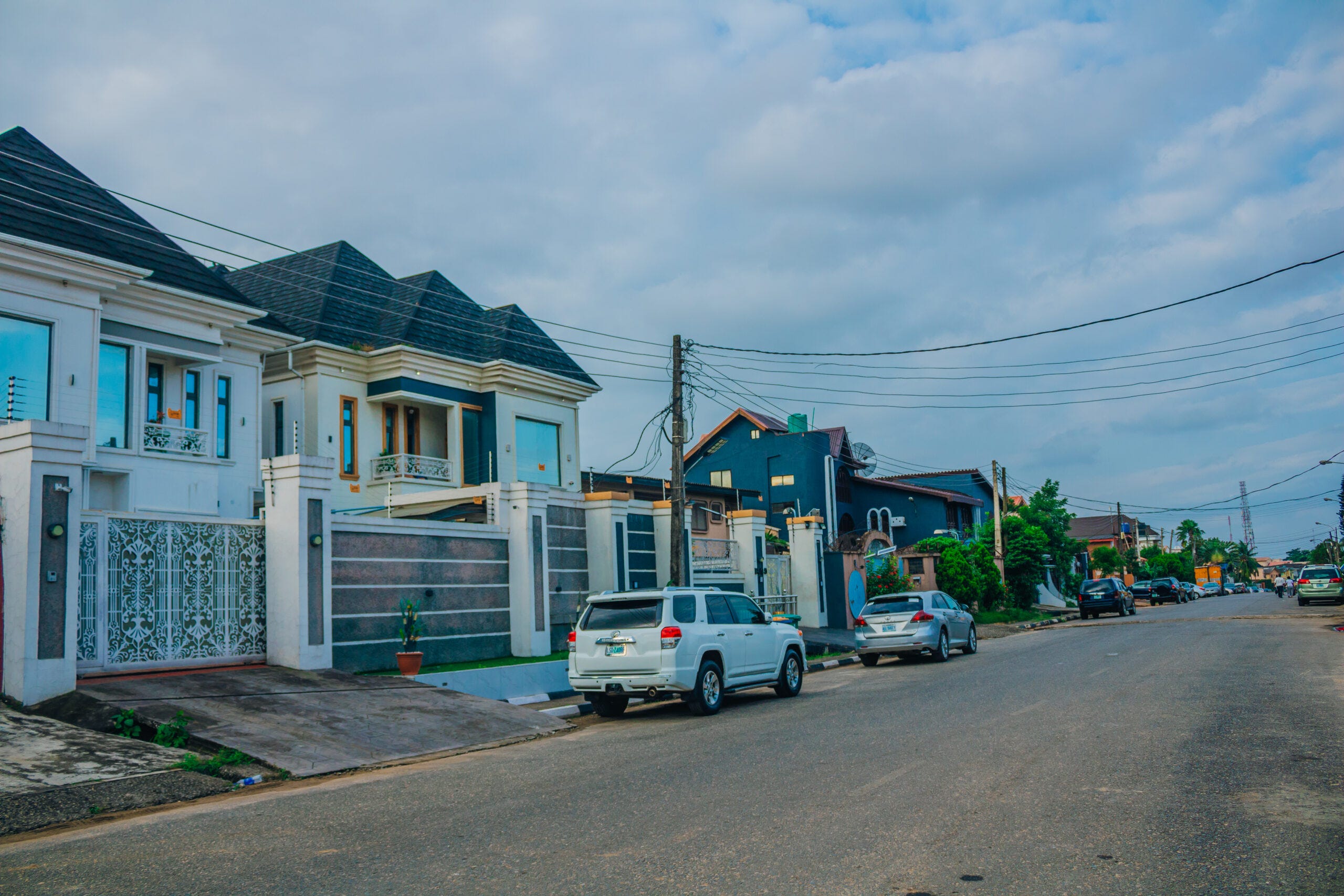
How Magodo, Omole keep neighborhoods clean amid Lagos dirt crisis

While Lagos continues to grapple with one of its most persistent urban problems, two residential estates in the city’s Ikeja axis have quietly built working solutions to waste management.
Omole Phase 1 and Magodo Phase 2 stand out across the city for their clean streets, organised layouts, and functional waste collection systems.
Visiting both estates, Ìkẹjà Record found that what sets them apart is not exceptional government attention, but something harder to replicate quickly: community structure.
In Lagos, waste management is officially administered by the Lagos Waste Management Authority (LAWMA), operating in partnership with private sector operators and residents. That same arrangement exists in both Magodo and Omole — but with a critical difference.
In both communities, residents have cultivated a working relationship with their private operators rather than leaving the system on autopilot.
In Omole Phase 1, the private service provider is Open Door Franchise. Residents and business owners told Ìkẹjà Record that waste is collected roughly twice a week.
A representative of Old English Superstore, a shopping outlet within the estate, confirmed the same frequency.
However, a PSP worker from Open Door Franchise put the figure higher, saying their trucks come around up to four times a week. According to the worker, the estate is divided into sectors, with specific collection days assigned to each zone, ensuring full coverage across the week.
Ìkẹjà Record observed this system in practice. On a Monday visit, some bins were already filled, with extra waste packed neatly in nylons beside them. By Wednesday, a PSP truck was making its rounds through the estate, clearing the backlog.
A security guard within the estate further confirmed that each sector manages its own payments, coordination, and general maintenance — a decentralised accountability model that distributes responsibility rather than concentrating it.
Magodo Phase 2 runs a similar but independently structured operation through a private company called Xtra Clean.
A business owner in the estate told Ìkẹjà Record that both residents and commercial establishments pay for waste management services. Fees vary by property type: some businesses pay as little as ₦7,500 quarterly, while others pay up to ₦15,000 monthly. A resident whose building includes a duplex and six flats said his property pays approximately ₦78,000 quarterly.
The business owner noted that Xtra Clean deploys staff to clean different zones at least twice a week, though the service previously ran daily.
Placed around the estate are dedicated trash cans for plastic bottles — a small but visible infrastructure encouraging residents to separate waste and support recycling.
Ìkẹjà Record reached out to the Omole Phase 1 and Magodo Phase 2 GRA Residents’ Associations to understand how these systems are managed internally. Neither had responded as of the time of this report. ✚


